When Prevention Looks Like Possibility: Standing With Migrant Families in North India
- Feb 10
- 3 min read

(A local women's group attends a tailoring training)
When she first arrived in the settlement in Faridabad, Asha (name changed) rarely left her home.
Her family had migrated from Bihar in search of work, carrying little more than their belongings and hope for stability. Without local identity documents, her children could not enrol in school. Without secure income, the family lived day to day, vulnerable to unsafe work and constant pressure to move again.
Stories like Asha’s are common across migrant communities in North India, where poverty, displacement, and lack of access to services create conditions in which exploitation and trafficking can thrive.
Since 2022, ARISE has been supporting a long-running migrant project in the region, led by religious sisters working quietly alongside families like Asha’s. Their focus is not rescue after harm has occurred, but prevention. Strengthening the everyday conditions that keep people safe.
From vulnerability to stability
Through the project, Asha was connected to a local women’s group. With support, she accessed tailoring training and began earning an income from home. Her children joined a non-formal education centre while documentation was arranged, and later transitioned into formal schooling.
Today, her family’s situation looks different. The children attend school regularly. There is food security. There is a sense of confidence where there was once fear. Asha’s story reflects the wider work of the project.
Between 2022 and 2024, thousands of migrant children accessed education support, either through non-formal learning, after-school classes, or enrolment into school. Many had previously been engaged in labour or were at risk of dropping out. Keeping children in education proved one of the strongest protections against trafficking and exploitation.
Alongside education, the project supported women and young people through skills training and income generation. Tailoring, small trade, livestock rearing, and vocational courses enabled families to stabilise their incomes and reduce reliance on unsafe migration or exploitative work.
Building protection at community level
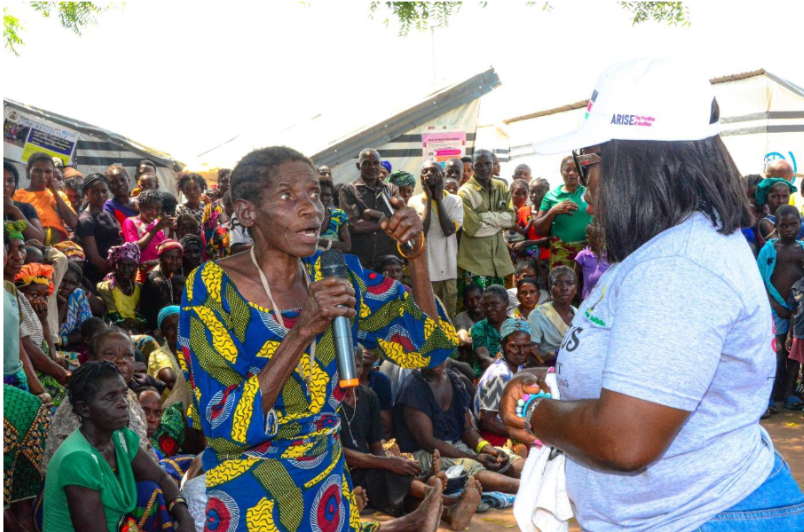
(Community meetings equip attendees with skills and knowledge to prevent human trafficking)
As the work deepened, the project placed increasing emphasis on community organisation.
Women’s groups, youth groups, and village vigilance committees became spaces where people could share concerns, learn about their rights, and identify risks together. These groups helped communities recognise the warning signs of trafficking and respond collectively, rather than in isolation.
By the most recent phase of the project, running from 2024 to 2025, over 3,800 people had accessed government services for the first time. Health care, education entitlements, pensions, and food support provided a safety net that made families less vulnerable to coercion and deception.
More than 400 young people completed skills training, with many moving into employment or self-employment. Over 140 families strengthened their livelihoods through income generating activities. Community based groups grew in confidence and coordination, forming a local defence against exploitation.
Quiet work, lasting change
There are no dramatic rescues in this story. No single moment that changes everything overnight.
Instead, there is slow, patient work. Listening. Accompaniment. Education. Livelihoods. Documentation. Trust.
This project is one of ARISE’s longest-running partnerships in India. Its impact lies not only in the numbers reached, but in the futures quietly redirected. Children staying in school. Women earning independently. Families choosing safety over risk.
In communities where trafficking networks often rely on invisibility and desperation, prevention looks like possibility.
To protect the identity of our partners, we have deliberately hidden details such as their names and location. If you would like to learn more about their work and are interested in supporting them, please get in touch.