


Leadership in Displacement
- Feb 24
- 4 min read
Conversations about Internally Displaced Persons (IDP) camps often centre on visible needs such as food, shelter, healthcare and protection. Far less attention is given to leadership, the quiet but powerful structures that sustain community life and hold people together amid loss, disruption, and uncertainty.
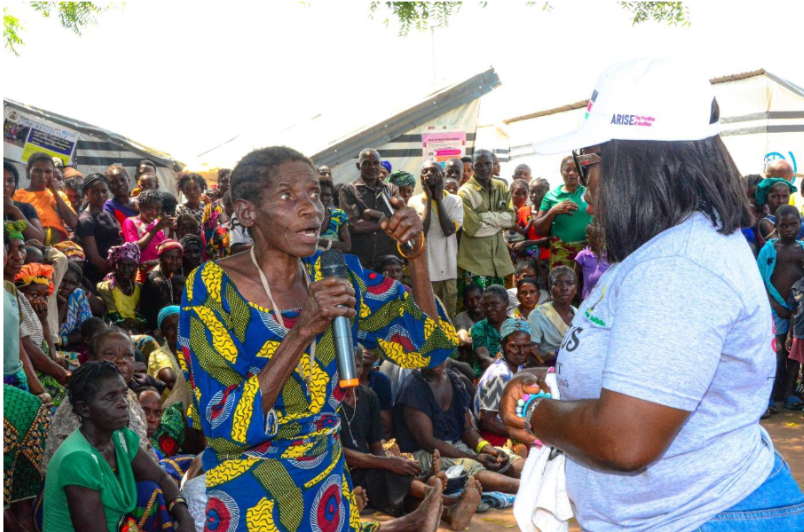
During my visits to IDP camps across Benue State and the Federal Capital Territory (FCT), one truth stood out clearly; displacement does not erase leadership, it reshapes it.
Leadership Structure in IDP Camps
Traditionally, the overall coordination of IDP camps is carried out by the State Emergency Management Agency (SEMA), often supported by other relevant government agencies responsible for sectors such as:
Health
Education
Water, Sanitation and Hygiene (WASH)
Security and Social Welfare
This provides formal structure and policy oversight.
However, real-time coordination of daily camp life is largely handled by IDPs themselves. Individuals who demonstrate leadership capacity, integrity, and commitment to service are appointed or selected as members of the IDP Camp Leadership. Across camps in different locations, there is a similar leadership structure. These leaders serve as:
Camp Chairpersons
Women Leaders
Youth Leaders
Security Focal Persons
Welfare Coordinators
These roles are not symbolic. They are functional, respected, and central to daily camp life.
The camp leadership is the first point of call for anyone, local or international organisations, government actors, NGOs, faith-based groups, or individuals seeking to provide any form of support, or humanitarian assistance to camp residents. Nothing happens in isolation of this leadership structure.
They serve as the watchdogs of the camp, ensuring, to the best of their ability, that residents are protected, that order is maintained, and that scarce resources are distributed with fairness and equity.
For instance, prior to my visits, our frontline partners working in the camps formally requested and obtained approval from camp leadership, which typically comprises both government representatives and IDP leaders. This process was not procedural, it was essential.
Upon arrival at each camp, I was required to hold an entry meeting with the camp leadership, during which I clearly stated the purpose of my visit. Consent was sought and obtained to tour the camp, interact with leaders and residents, take photographs in line with safeguarding principles, and conduct interviews with relevant representatives. This reinforced the authority, responsibility, and centrality of camp leadership in protecting residents and maintaining order. Even in the midst of loss, scarcity, and daily struggle, leadership and order are maintained.

Leadership and Humanitarian Response
While the structure of leadership is similar across camps, the expression of leadership varies. Leadership plays a central role in humanitarian response. How leadership is expressed in humanitarian settings significantly influences whether human dignity is preserved, human rights are respected, and people affected by crises are supported not just to survive, but to realise their full potential on their own terms. In displacement, leadership determines whether assistance is empowering or disempowering, inclusive or exclusionary.
In newer and government-established camps, there is often a strong presence of a wide range of government agencies such as emergency management, health, security, and social welfare institutions, local NGOs and international humanitarian organisations, playing visible coordination and oversight roles alongside IDP leaders. In contrast, older camps tell a different story.
In many long-standing camps, some in existence for years, government presence is limited. Yet these camps continue to function. In such camps, leadership is predominantly held by the IDPs themselves. Displaced persons are not only beneficiaries; they are administrators, mediators, organizers, and protectors of their own community. Leadership has evolved out of necessity, sustained by trust, responsibility, and service.
Strengthening Leadership to Prevent and Respond to Human Trafficking
IDP camp members are highly vulnerable to Human Trafficking. Arise’s Frontline Partners working in IDP camps do not replace the existing leadership structure, they strengthen and build upon it.
One of the key outcomes of these initiatives in IDP camps has been the establishment of IDP Camp-Based Human Trafficking (HT) Prevention and Response Pathways, embedded directly within the existing camp leadership system, which adhere strictly to Standard Operating Procedures (SOPs) and align with Nigeria’s National Referral Mechanism (NRM).
How the IDP Camp-Based HT Referral Pathway Works

This system ensures that survivors are not left navigating complex systems alone. It creates a structured, accountable, and survivor-centred pathway, within the familiar and trusted leadership framework of the camp.I remain grateful to all our frontline partners who have enabled me to visit these camps and the camp leaders who welcomed me into their communities to learn about how Arise can continue to support IDP camps across Nigeria.
We have intentionally not shared names of our frontline partners or the location of the IDP camps to protect their identities.


